
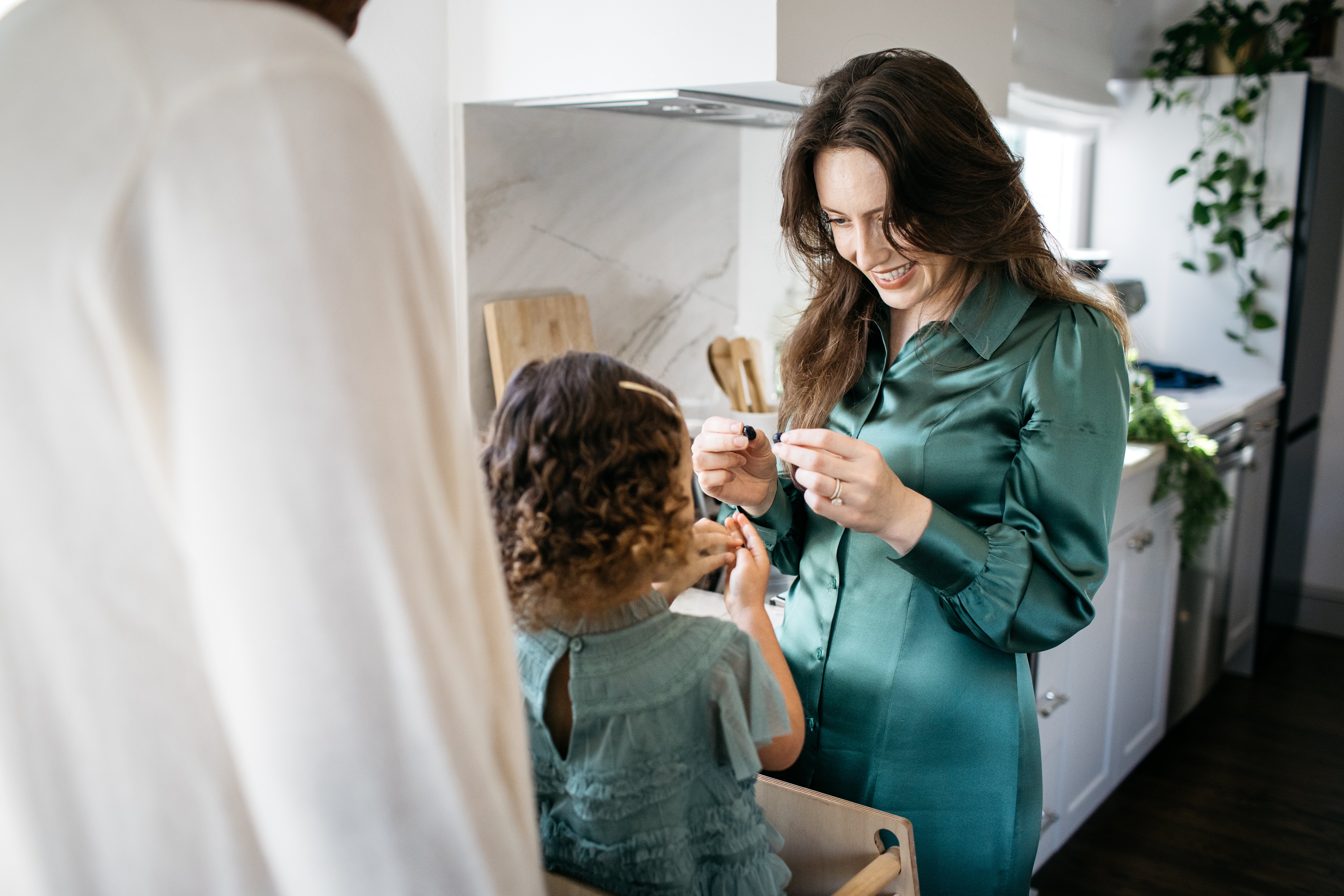
Home design is overwhelming. I made it simple.
By Jacqueline Norrise | Interior Designer | A Design Lifestyle
As featured in Architectural Digest · Forbes · Luxe · Real Simple ·
Homes & Gardens · Better Homes & Gardens · Business of Home · HGTV
Stop guessing. Designing your home shouldn't feel this hard. Get the free guide →

I have spent 15 years telling families exactly what to do.
Then I did it myself.
Every designer I know will tell you the same thing — designing your own home is harder than designing for a client. The emotional attachment, the competing priorities, the budget that feels personal in a way that a client's never does.
And yet — every principle I had spent 15 years teaching my clients worked exactly the way I said it would.
The questionnaire. The sequence of decisions. The partner survey. The non-toxic materials framework. The seasonal approach changes the home every quarter. The room needs to serve as a playroom at 7 am and a dinner-party space at 7 pm.
I didn't figure these things out by becoming a mother. I already knew them. What changed was that I lived them — in my own home, for my own family.
Where I started.
The same place I tell every client to start.
I answered the questionnaire. Not quickly, not aspirationally — honestly. Who uses this space? How it needs to function. What I want it to feel like. What I absolutely do not want. What my partner wants. Where we agree and where we don't.
Two people. Two questionnaires. One shared direction.
The Partner Survey is in the Workbook for this exact reason — because home design is one of the most intimate collaborative decisions a couple makes. Without a shared framework, it can become a source of conflict rather than a source of connection. My partner and I completed it separately, compared our answers, and agreed on a shared direction before making a single purchase.
That conversation saved us from three rooms of regret.
The nursery.
This is the room that taught me the most.
I have designed dozens of nurseries for clients. I know every principle — cordless treatments, anchor points for all large furniture, washable everything, storage that evolves, natural materials throughout, no off-gassing synthetic rugs or MDF furniture near where a baby sleeps and breathes.
Knowing the principles and applying them to a room where your own child will sleep for the first years of their life are different experiences.
What I did — in the order I always recommend:
Fixtures first. Flooring, window treatments, and lighting. These decisions are permanent, and they set everything else. Cordless Roman shades in a natural linen. Hardwood floors that can be cleaned properly—a dimmable pendant, not an overhead fixture.
Furnishings second. A crib that converts. A dresser that doubles as a changing table and stays a dresser when the baby grows into a child. A rug — wool, not synthetic — large enough to anchor the space and soft enough to sit on.
Accessories last. Art. A small plant. One carefully edited shelf.
The room that results from following this sequence doesn't look like a nursery catalog. It looks like a room that will still be beautiful in ten years.

Stop guessing. Designing your home shouldn't feel this hard. Get the free guide →
The family kitchen.
The kitchen is where I applied the most professional discipline to the most personal space.
Every designer has opinions about kitchens. I have many. But designing your own kitchen means sitting with those opinions and asking, which of these actually matters to how I live?
What I kept from my professional process:
The range hood. Non-negotiable. Indoor air quality is one of the most overlooked aspects of a healthy home. A properly vented range hood protects the air your family breathes every time the stove is on.
Under-cabinet lighting. It eliminates shadows on countertops, makes cooking safer, and transforms the kitchen in the evening without any additional fixtures.
Hardware that can be cleaned. Simple. Functional. Nothing that traps grease or requires special care. Natural brass ages beautifully and doesn't show every fingerprint as much as matte black does.
Medium-tone wood on the cabinets. I tell every client this — medium tones show the least wear, photograph beautifully, and stay timeless across decades. I applied my own advice.
The living room has to do everything.
7 am: A two-year-old pulling toys from a closed-storage console. 12 pm: A video call with natural light and a professional backdrop. 7 pm: Dinner guests seated on a sofa that hasn't shown a single mark.
This is the room I think about when I write the family home guides — because it is the room that most families get wrong, not because they lack taste but because they design for one version of the day instead of all of them.
What I applied in my own space:
Closed storage for everything that belongs to a child. Open shelving looks beautiful in a showroom. In a family home, it becomes chaos by Wednesday. One console with closed doors. Everything inside. The room stays calm.
A sofa that seats the whole family. Not the most beautiful sofa I could find. The one that is the right size for how we actually gather — deeply upholstered, slipcovered, large enough.
Flexible seating. Chairs that move. An ottoman that becomes a coffee table or a seat. The room that can be reconfigured for the occasion is the room that always works.
Three light sources, always. The overhead light goes on a dimmer and stays low. A floor lamp in the reading corner. A table lamp on the console. The room, lit by three sources at different heights, feels designed. The room that relies on one overhead light feels institutional.
What designing my own home confirmed.
The process works because it removes emotion from the decisions. Even knowing everything I know, having the questionnaire written down — having my partner's answers to compare to mine — made every decision faster, clearer, and less fraught.
The sequence matters more than the style. Fixtures before furnishings. Structure before accessories. Function before style. Every time I have watched a room fail, it is because this sequence was reversed.
Natural materials are not a preference. They are a standard. Wool. Linen. Solid wood. Natural stone. Cotton. Every surface in a family home that is touched daily should be natural, washable, and built to last. This is not expensive — it is intentional.
Start wherever you are. I did not design my home all at once. I started with the rooms that mattered most to how we live right now. The rest came room by room, season by season. The Workbook is designed to be used exactly this way — start wherever you are, come back when you need it.
"She kept us from making expensive mistakes by guiding us to the best choices. Jacqueline is such a gift. My husband and I call her our 'Design Therapist.' She provided that expert, creative, unbiased perspective that allowed us to blend our different styles and personalities." — C.N., San Francisco
The process I used is available to you.
Everything I applied in my own home — the questionnaire, the partner survey, the room-by-room sequence, the materials framework, the non-toxic lens, the seasonal approach — is inside the Family Home Interior Design Workbook.
The only complete step-by-step design system built specifically for families — from first home to forever home.
Start with the free guide:
Or go all in with the complete Workbook:

About Jacqueline Norrise
As featured in Architectural Digest · Forbes · Luxe · Real Simple · Homes & Gardens · Better Homes & Gardens · Business of Home · HGTV
Jacqueline Norrise is an interior designer with 15 years of experience designing family homes across the San Francisco Bay Area. After years of full-service design work, she distilled her entire process — the questionnaires, room-by-room guides, budget templates, materials education, and maintenance systems she used with every client — into the Family Home Interior Design Workbook.
The only complete step-by-step design system built specifically for families — from first home to forever home.
Home design is overwhelming. I made it simple.
Stop guessing. Designing your home shouldn't feel this hard.
You have a designer. Welcome to the Home Refresh Club.
Follow along on Pinterest | #homerefreshclub #adesignlifestyle


