
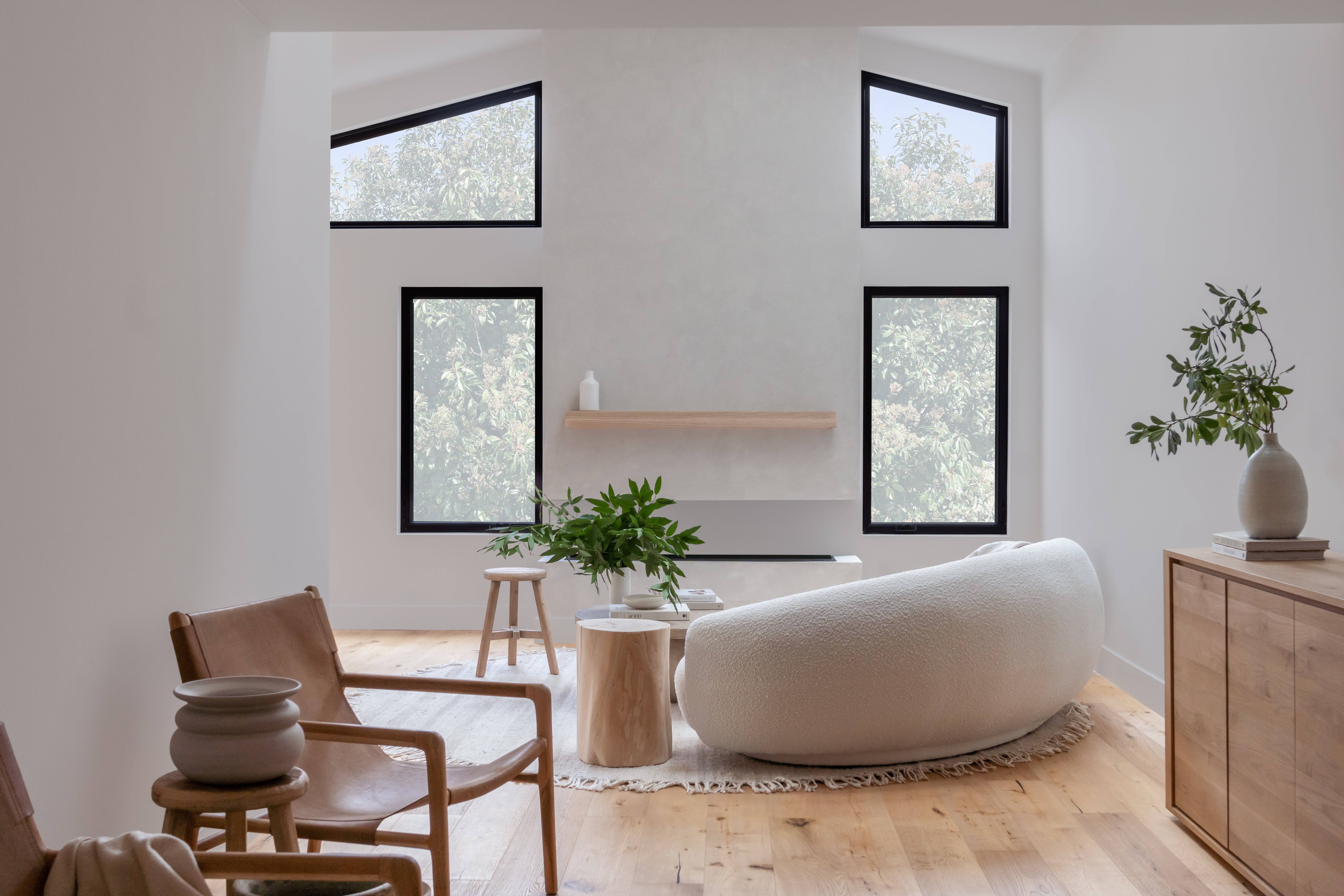
Summer arrives, and suddenly everyone is home all day. Here's the complete summer home guide — the seasonal process that keeps a family home beautiful, cool, and functional all summer long.
By Jacqueline Norrise | Interior Designer | A Design Lifestyle
As Seen In: ARCHITECTURAL DIGEST · REAL SIMPLE · FORBES · BETTER HOMES & GARDENS · HOMES & GARDENS · BUSINESS OF HOME
An entryway system that gets everyone out the door by 8, nothing forgotten. Refresh once. Reset daily. I got you. [Send Me the Reset →]
Summer arrives, and suddenly everyone is home.
The routine that worked in April doesn't work in July.
More people. More light. More heat. More mess. More hours in every room.
Summer is the season that reveals every gap in a family home — the entry that can't handle beach bags and wet towels, the living room that becomes a play space all day, the kitchen that runs hot from 8 am to 8 pm, the bedrooms that trap heat by 3 in the afternoon.
This summer home guide is the seasonal process that keeps a family home working beautifully — from the first warm weekend to the last day of school vacation.
Start with the light.
Summer light is different from any other season. More of it. Earlier. Longer. More direct. And in a family home, unmanaged summer light means heat, glare, fading of textiles and artwork, and rooms that feel harsh rather than warm.
Window treatments are your first summer task.
Sheer curtains filter light without blocking it — they keep a room feeling open while reducing the direct heat that comes through south and west-facing glass in the afternoon.
Blackout curtains in bedrooms are non-negotiable for families. Children sleep better in dark rooms. Adults do too. A bedroom that traps light until 9 pm disrupts sleep from June through August.
UV film on large windows is the invisible upgrade most families don't know about. Applied directly to the glass, it blocks up to 99% of UV rays — protecting your floors, rugs, and upholstery from fading while reducing heat gain without changing how the window looks.
The summer home guide principle: manage the light before you manage the temperature. Most of the heat in a family home in summer comes through the windows.
Cool the home without overcooling it.
A home that runs the air conditioning at full capacity all summer is an uncomfortable home — too cold in the morning, too hot by afternoon, and expensive.
The professional approach is layered cooling — multiple strategies working together, so no single system has to do all the work.
Ceiling fans before air conditioning. A ceiling fan running on its summer setting — counterclockwise, pushing air down — makes a room feel four to six degrees cooler without lowering the actual temperature. Run the fan first. Use the air conditioning less.
Strategic ventilation. In the Bay Area and most of coastal California, summer nights are cool. Open windows after 8 pm. Close them by 9 am before the day heats up. The house that breathes at night stays cooler through the day.
Zone your cooling. Cool the rooms you're actually using, not the entire house. Close vents and doors in unused rooms. A family that lives on one floor during the day doesn't need to cool the second floor until evening.
The outdoor spaces.
Summer is the season when your outdoor spaces either work or sit unused. The summer home guide approach to outdoor living is simple — set it up once at the beginning of the season and maintain it weekly.
At the start of summer:
Bring out the cushions and textiles stored fromWinterr. Inspect for mildew, fading, or damage before committing to pieces that won't last the season.
Set up seating in the orientation you'll actually use — not the most aesthetically pleasing arrangement, but the one that works for how your family gathers. The outdoor sofa that faces the view but gets full afternoon sun will sit empty. Position for comfort first.
Add outdoor lighting. Lights on a timer. String lights. Solar path lighting. An outdoor space that isn't lit after 6 pm is no longer used then.
The outdoor space that takes two hours to set up at the start of summer returns that time many times over in evenings spent outdoors, dinners eaten outside, and children who play outdoors instead of inside.

An entryway system that gets everyone out the door by 8, nothing forgotten. Refresh once. Reset daily. I got you. [Send Me the Reset →]
The entry in summer.
The family home entry in summer takes more abuse than any other room.
Wet towels. Beach bags. Sunscreen. Sports equipment. Shoes that multiply by Wednesday. Sand that appears regardless of how far you are from a beach.
The summer entry system:
Hooks at two heights. Adult height and child height. One hook per person. Everything has a place the moment it comes in the door.
A lidded basket or bin for the floor. Balls, bags, anything that can't hang. One container. When it's full, it gets sorted. Not before.
A doormat that actually works. Coir or rubber. Outdoor on one side of the door, indoor on the other. Two mats, not one.
A dedicated spot for wet items. A hook with a drip tray below it, or a designated hook in the bathroom nearest the entry. Wet towels on a hook dry and stay off every other surface.
The summer entry setup takes 5 minutes and saves 30 minutes of daily resets.

The summer home guide in practice.
The complete summer home guide covers:
Furnishing or renovating too? The seasonal framework comes standard in every System.
An entryway system that gets everyone out the door by 8, nothing forgotten. Refresh once. Reset daily. I got you. [Send Me the Reset →]
A complete step-by-step design system built specifically for families — from first home to forever home.
Start free with The School Morning Reset: [Send Me the Reset →]
Or explore the fullSystemm: [Shop the Tools →]

About Jacqueline Norrise
As Seen In: ARCHITECTURAL DIGEST · REAL SIMPLE · FORBES · BETTER HOMES & GARDENS · HOMES & GARDENS · BUSINESS OF HOME
Jacqueline Norrise is an Architectural Digest–featured interior designer with a degree in Interior Architecture & Design, 15 years of experience, and 100+ family homes — from San Francisco to New York. After years of full-service design work, she distilled her entire process — the questionnaires, room-by-room guides, budget templates, materials education, and maintenance systems she used with every client — into The Family-Proof Systems.
A complete step-by-step design system built specifically for families — from first home to forever home.
Start with The School Morning Reset.
An entryway system that gets everyone out the door by 8, nothing forgotten. Refresh once. Reset daily. I got you. [Send Me the Reset →]
Follow along on Pinterest — #homerefreshclub #adesignlifestyle


