
Home design is overwhelming. I made it simple.
By Jacqueline Norrise | Interior Designer | A Design Lifestyle
As featured in Architectural Digest · Forbes · Luxe · Real Simple ·
Homes & Gardens · Better Homes & Gardens · Business of Home · HGTV
Stop guessing. Designing your home shouldn't feel this hard. Get the free guide →

Winter asks more of your home than any other season.
More warmth. More light. More gathering. More time spent inside — in every room, at every hour of the day.
The home that works beautifully in December is not necessarily more expensive. It is a more prepared one.
Summer homes can be open, airy, and minimal. Winter homes need to work harder — insulating against cold, compensating for lost daylight, creating the conditions for the kind of gathering that happens naturally when everyone is inside together.
This Winter home guide is the seasonal process that prepares every family home for the coldest, coziest, and most socially demanding season of the year.
Weatherproof before you decorate.
The most important Winter home task has nothing to do with aesthetics. It is structural — and it is the one most families skip in favor of the more visible work.
The Winter weatherproofing checklist:
Weatherstripping on every exterior door and window. Run your hand along the edge of every exterior door on a cold day. If you feel air movement, the weatherstripping has failed. Replacing it takes fifteen minutes per door and costs under $10. The energy savings over a single Winter pay for it many times over.
The heating system was serviced before December. A furnace or heat pump that hasn't been serviced in over a year is inefficient. Replace filters. Clear vents. Have the system professionally checked before the coldest months arrive. A system that fails in January costs far more to repair than one that was maintained in October.
Pipes in unheated spaces are insulated. Crawl spaces, garages, exterior walls. Pipe insulation is inexpensive and takes an afternoon. A burst pipe in February is not.
Have the chimney swept if you use a fireplace. Before the first fire of the season — not after. A chimney that hasn't been swept accumulates creosote, creating a fire risk. One sweep per year. Non-negotiable if you use your fireplace.
Gutters cleared after the last leaves fall. Ice dams form when gutters are blocked, and water backs up under the roofing material. Clear gutters in November. Avoid ice damage in January.
The Winter home that stays warm, dry, and functional through February is the one whose family spent a weekend in October on these tasks.
The Winter lighting framework.
Winter daylight in the Bay Area lasts approximately nine hours at the solstice. A family that wakes at 7 am and goes to bed at 10 pm spends more than half of every Winter day in artificial light.
How a home is lit in Winter determines how it feels to live in.
The Winter lighting reset:
Warm bulbs throughout. 2700K to 3000K — warm white — is the Winter standard. Cool white bulbs feel institutional in a home that is otherwise warm and textured. Check every fixture and replace anything above 3000K.
More sources, lower intensity. The instinct in a dark season is to add brighter light. The professional approach is the opposite — more sources at lower intensity, positioned at different heights. A room lit by five 40-watt lamps feels more comfortable than a room lit by one 200-watt fixture.
Timers on everything. Living room lamps on at 4 pm. Bedroom lamp on at 7 pm—entry light on at dusk. The Winter home that feels welcoming when you arrive home at 5:30 pm in the dark is the one whose lights came on before you got there.
Candlelight in every room you gather in. Dining room. Living room. Bathroom. Beeswax or soy candles in simple holders. Lit before dinner. Candlelight in Winter is not decorative. It is atmospheric — the warmest and most affordable lighting tool in any home.

The Winter textile framework.
If the fall reset introduced warmer textiles, Winter deepens them. The Winter home is the most layered home of the year — and the layering is what creates the feeling every family is looking for when they say they want their home to feel cozy.
Bedrooms:
Add a quilt over the duvet. The layered bed — duvet, quilt, and an extra blanket folded at the foot — is the Winter standard. It allows everyone to adjust through the night without waking.
Flannel or jersey sheets. Cotton percale sheets that feel crisp and light in summer feel cold in winter. Switch to flannel or jersey for the season. This is the most underrated Winter home upgrade available.
Add weight to the bedroom. A heavier curtain, a wool rug, a throw on the chair in the corner. The bedroom that feels warm before the heat comes on is a bedroom with the right textiles.
Living spaces:
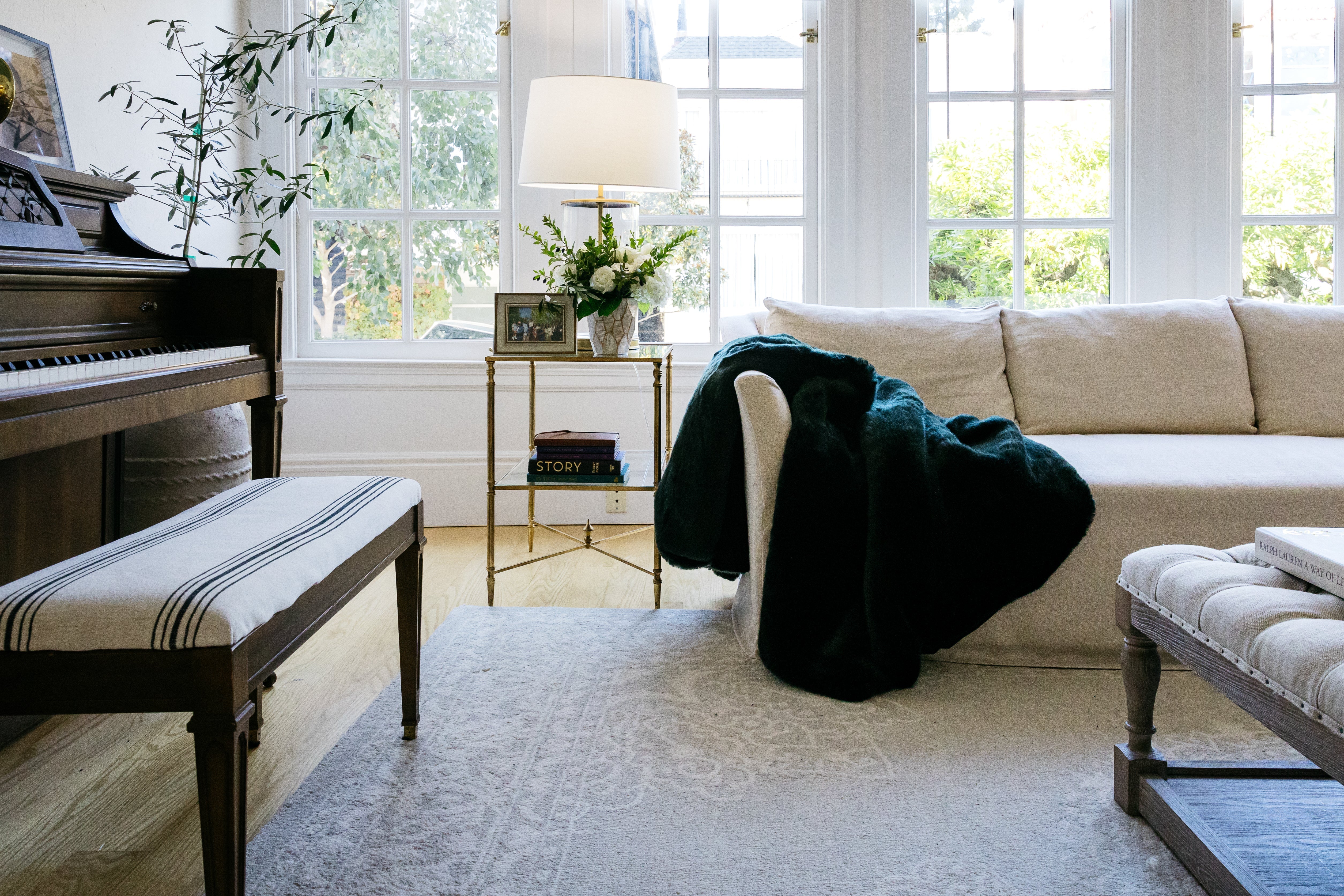
One wool throw per seat. The living room, which has a wool throw on every sofa seat and armchair, is the room where people stay. The room without them is the room people leave to get a blanket and don't come back to.
Layer rugs over the floor when it's cold. A natural fiber rug over hardwood, or a sheepskin over a larger rug in a reading corner. Texture underfoot changes how a room feels in Winter more than almost any other single change.
Close off unused rooms. The room that isn't being heated or used doesn't need warm textiles. The family that concentrates warmth in the rooms they actually live in stays warmer with less energy.
The Winter gathering framework.
December is the month a family home is asked to host more often than any other. The Winter home guide approach to gathering is preparation — done before the invitations go out.
The dining room:
Assess your candle supply. Dinner by candlelight in December is the standard, not the special occasion. Have enough candles to light the table for every dinner from Thanksgiving through New Year. Replace them before they run out.
Check your table capacity. Can your dining table seat everyone you want to have at it? If not, a folding table with a tablecloth, a bench pulled from another room, and chairs borrowed ahead of time. Solve this in November, not the morning of.
Set the table the day before. The family whose table is set when guests arrive experiences the gathering differently from the family still setting the table when the doorbell rings.
The entry:
A hook for every coat. Holiday gatherings mean multiple coats arriving in the same five minutes. Every coat needs a place, or it ends up on a bed. Add a temporary hook rail if your permanent hooks aren't enough.
A mat that handles Winter traffic. Salt, mud, wet boots. A rubber-backed mat inside the door catches what the outdoor mat doesn't. Replace it at the start of the season.
*[INSERT IMAGE 2 — MID: HORIZONTAL, min 1200px — a beautifully set Winter table or a styled Winter vignette. Warm, candlelit, and inviting.]
Stop guessing. Designing your home shouldn't feel this hard. Get the free guide →
The Winter cleaning rhythm.
Winter changes what accumulates and where. The Winter home-cleaning rhythm accounts for closed windows, more time indoors, more cooking, and more guests.
Weekly in Winter:
- Vacuum all upholstered surfaces — sofas, armchairs, cushions. Closed windows mean dust stays inside.
- Wipe down all light switches, door handles, and remote controls — higher contact surfaces in a closed home.
- Clean the stovetop and oven exterior after every heavy cooking session.
Monthly in Winter:
- Wipe down baseboards and radiators — dust burns when the heat comes on and circulates through the home.
- Wash throws and blankets — in regular use, they accumulate more quickly than any other textile.
- Clean behind and beneath appliances in the kitchen — Winter cooking leads to more grease buildup.
At the end of the season:
- Wash and store Winter textiles before storage — mildew develops on unwashed fabric.
- Service humidifiers if used — mineral buildup affects performance and air quality.
The winter home in practice.
The week before December: Weatherproofing complete. Heating system serviced. Gutters cleared.
December 1: Warm bulbs in every fixture. Timers set. Wool throws on every seat. Flannel sheets on every bed. Candle supply assessed and stocked.
Before the first gathering: Table assessed. Hooks ready. Entry mat in place.The guestt roomis prepared.
Throughout the season: Weekly cleaning rhythm adjusted. Candles replenished. Textiles washed.
The winter home that feels like a sanctuary through February is the home whose family prepared for the season — not the one that reacted to it.
The winter home guide — and every seasonal guide — is inside the Family Home Interior Design Workbook. The seasonal living framework covers all four seasons as a recurring process. Applied once, refined annually, built into the rhythm of a family homeYou onlyonly compla ete step-by-step design system built specifically for families — from first home to forever home.
Start with the free guide:
Or go all in with the complete Workbook:

About Jacqueline Norrise
As featured in Architectural Digest · Forbes · Luxe · Real Simple · Homes & Gardens · Better Homes & Gardens · Business of Home · HGTV
Jacqueline Norrise is an interior designer with 15 years of experience designing family homes across the San Francisco Bay Area. After years of full-service design work, she distilled her entire process — the questionnaires, room-by-room guides, budget templates, materials education, and maintenance systems she used with every client — into the Family Home Interior Design Workbook.
The only complete step-by-step design system built specifically for families — from first home to forever home.
Home design is overwhelming. I made it simple.
Stop guessing. Designing your home shouldn't feel this hard.
You have a designer. Welcome to the Home Refresh Club.
Follow along on Pinterest | #homerefreshclub #adesignlifestyle


